
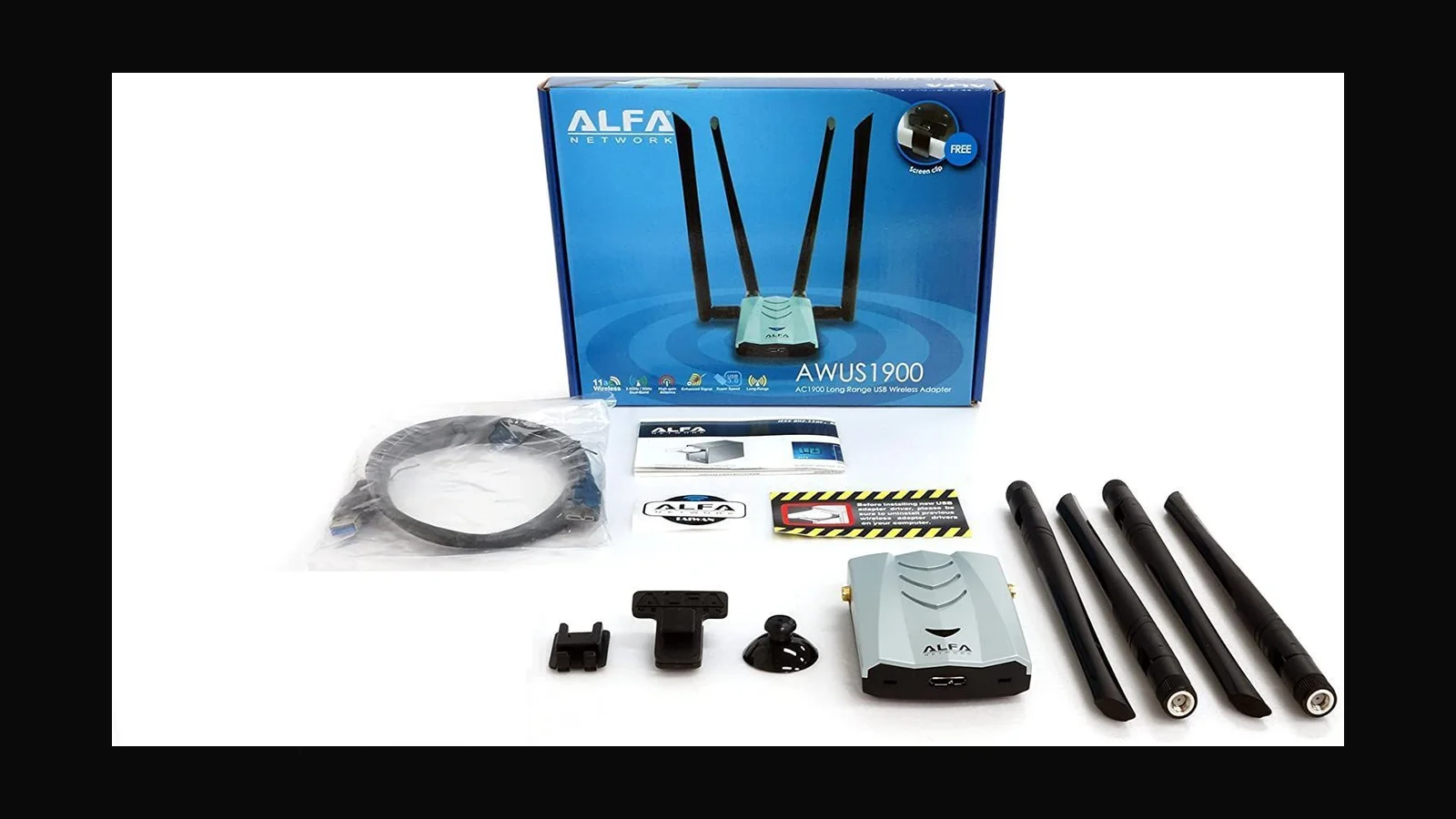
Chipset, bands, and lab caveats for the ALFA AWUS1900 we sell in Sri Lanka — when the four-antenna AC1900 makes sense and when a simpler card is enough.
Comparing ALFA USB Wi-Fi adapters? Open the Wi-Fi adapter comparison table.
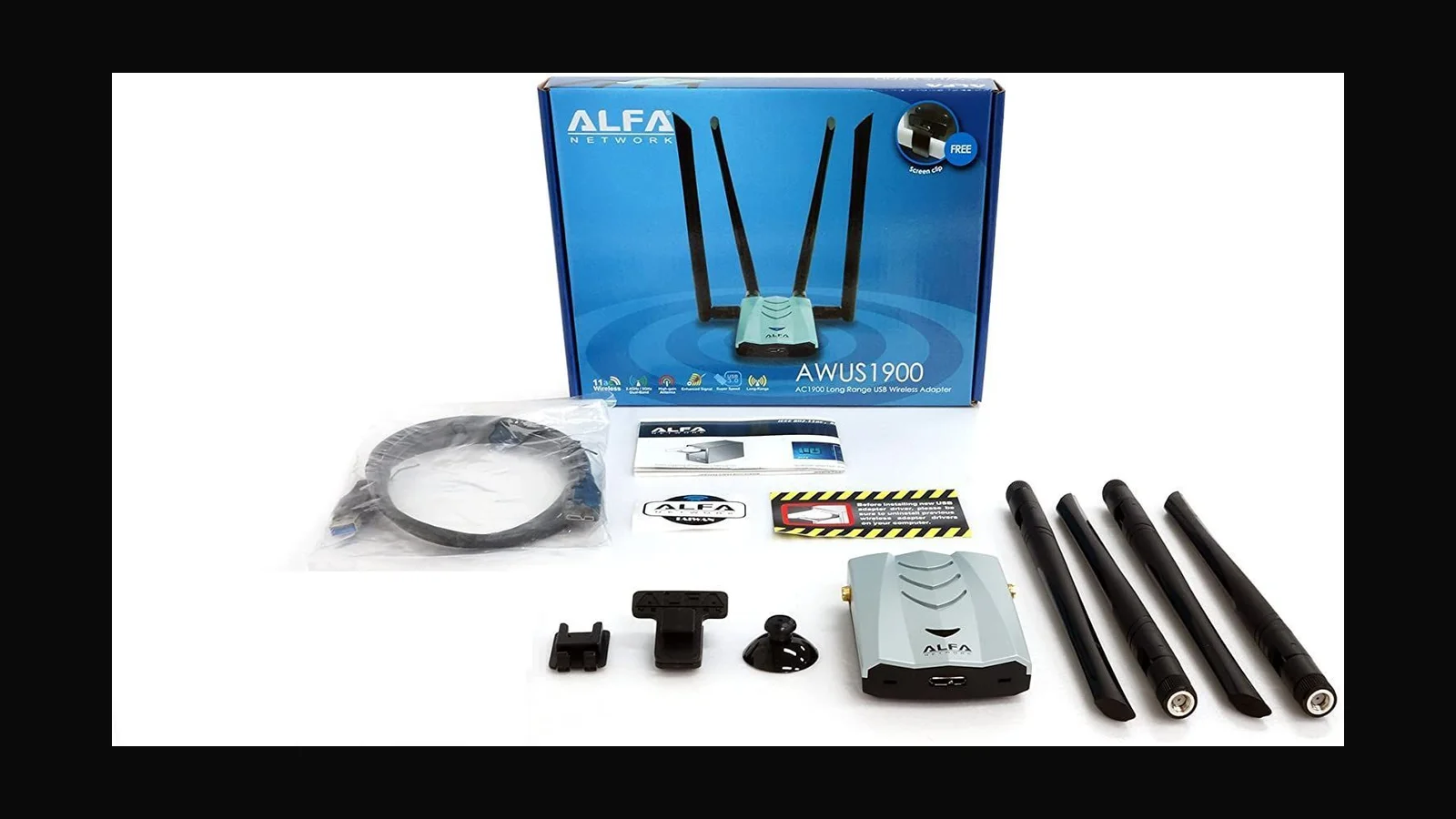
What it is
The ALFA AWUS1900 is a USB Wi-Fi adapter we stock at ALFA Network LK for connectivity upgrades and for security labs that need a dedicated radio (instead of a flaky internal laptop card).
Price: LKR 35,000 (VAT inclusive).
What it is actually used for
In authorised work and teaching I use adapters like this to:
- Put a known chipset into monitor mode for lab captures on SSIDs you own
- Give Kali/Parrot a radio that behaves more predictably than many built-in Intel/Broadcom cards in VMs
- Separate “office Wi-Fi” from “assessment radio” on the same laptop
- Practice aircrack-ng suite workflows in a classroom setup or isolated lab AP
It is not a licence to attack the café AP downstairs.
Key specs (verify-able)
| Item | Detail |
|---|---|
| Chipset | Realtek RTL8814AU (AC1900 class, commonly described as 4×4) |
| Bands | Dual-band 2.4 GHz and 5 GHz |
| Standard | IEEE 802.11ac (Wi-Fi 5) with legacy a/b/g/n support |
| Interface | USB 3.0 |
| Antenna | Four external antennas (high-gain dipole style on retail kits) |
Monitor mode / Kali notes
RTL8814AU monitor-mode support depends on out-of-tree or newer in-kernel Realtek drivers. Expect more friction than MediaTek MT76 cards. Strong as a high-throughput Windows/macOS client adapter; for pentest primary radios many practitioners still prefer ACM/ACHM/NHA-class cards.
Driver behaviour changes across kernel versions. Before a paid engagement, reproduce monitor mode and injection on the same OS image you will use on-site.
Who it suits / who should pick something else
Choose AWUS1900 when you want maximum client throughput and four antennas on a laptop dock. Choose AWUS036ACM or AWUS036ACHM if monitor-mode reliability on Linux is the main job. Choose AWUS036NHA if you only need rock-solid 2.4 GHz ath9k labs.
Practical setup notes
On Windows, use ALFA's current driver package
On Kali, confirm
lsusbshows RTL8814AU and check which driver bound (lsmod)Do not assume injection works until you test
Prefer a USB extension so the antennas sit away from the laptop chassis
Disable NetworkManager on the assessment interface before
airmon-ngDocument MAC addresses and physical labels when several adapters share a kit bag
Legal and ethical use
Wireless adapters with monitor mode are routine in authorised Wi-Fi assessments and classroom labs. They are also easy to misuse.
In Sri Lanka, unauthorised access to computer systems can engage the Computer Crimes Act No. 24 of 2007. This article is product guidance, not legal advice. Only capture or inject against networks you own or networks named in a written authorisation that covers those methods.
FAQ
Will this work in a VirtualBox/VMware Kali guest?
Often yes if USB passthrough is stable and you use a short cable. Some chipsets are happier on bare metal. If airmon-ng fails, test on a live USB Kali before blaming the adapter.
Does monitor mode equal packet injection?
No. Many chipsets do both in community testing, but you should verify on your kernel with aireplay-ng injection tests inside a lab SSID you own.
Is AWUS1900 enough for 5 GHz / Wi-Fi 6 work?
Check the bands section above. A 2.4 GHz-only card will not see 5 GHz clients. Wi-Fi 6E cards add 6 GHz for connectivity; monitor-mode maturity still varies by driver — verify on your kernel before a client engagement.
How do I order in Sri Lanka?
Use the CTA below. We sell these for training and authorised testing, with ID checks and an authorised-use declaration before dispatch.
Ordering in Sri Lanka
Price: LKR 35,000 (VAT inclusive).
Order on alfanetworklk.com or message Dishan on WhatsApp at +94 75 255 0704. Payment: COD, KokoPay, or bank deposit. ID verification and a signed authorised-use declaration are required before dispatch.
Comments (0)
No public comments yet.